

How Do You Choose the Right Small Glass Bottles?
Key Takeaways
- Small glass bottles usually run from 5ml to 30ml. Pick the size from how your customer will use the product, not just how much you want to sell.
- The closure decides how the product comes out: a pipette for drops, a roller ball for skin, a spray for scent, a plain cap for pouring.
- Clear glass shows the product off. Amber, coloured and Miron violet glass cut down the light reaching what's inside.
- Closures have to match the bottle's neck, so use the Add Compatible Item section on each product page to find the ones that fit.
- Browse our dropper bottles, or get in touch and we'll help you choose the right small bottle.
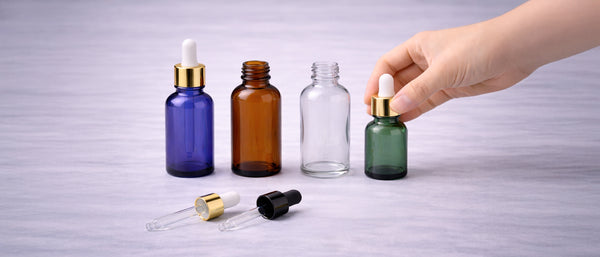
Small dropper bottles in blue, amber, clear and green glass.
How Do You Choose the Right Small Glass Bottles?
Small bottles do a lot of work for their size.
They hold serums, essential oils, perfume samples, beard oils, tinctures and travel sizes. They go into gift sets, subscription boxes and sample packs. For plenty of customers, a small bottle is their first taste of your brand.
So it pays to get it right.
Choosing a small glass bottle comes down to five things: the size, the closure, the colour of the glass, the shape and how many you need. Work through them in that order and the choice gets much easier.
What Counts as a Small Glass Bottle?
There's no official cut-off. But in packaging, "small" usually means 5ml to 30ml, and sometimes 50ml.
Here's how those sizes tend to be used:
- 5ml. Samples, testers, essential oils and high-value serums.
- 10ml. Roller blends, perfume oils, essential oils and travel sizes.
- 15ml. Face oils, tinctures and smaller serums.
- 30ml. The standard size for serums and face oils, and a popular size for perfume.
If you need a bottle for spirits, that's a different job with different necks. Our guide to miniature spirit bottles covers those.

Featured product
5ml Amber Glass Dropper Bottle (Small)
A small amber bottle that suits samples, testers and essential oils sold a few drops at a time.
View productWhat Size Small Bottle Do You Need?
Start with how the product gets used.
A face serum is used a few drops at a time. A 30ml bottle lasts a good while, and the customer finishes it while it's still fresh. An essential oil is even more concentrated, so 5ml or 10ml is plenty.
A sample is different. Its job is to let someone try the product, not to last for months. That's why 5ml bottles are so popular for testers and discovery sets.
Then think about where it's going.
Travel sizes need to be small enough for hand luggage. Gift sets need bottles that sit neatly together in a box. Subscription boxes need bottles that are light and fit the box.
One more tip. Don't fill to the brim. Leave a little headspace so the closure seats properly and the product doesn't leak when it warms up. Do a test fill with your real product before you print labels.
Our size guide explains ml, cl and oz if you're working from a recipe in different units.
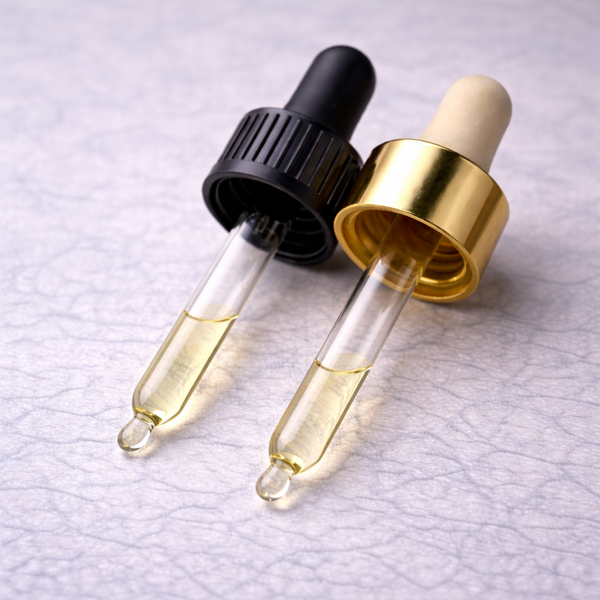
Pipettes come in different collars and teat colours.
Which Closure Should a Small Bottle Have?
The one that matches how the product comes out.
That sounds obvious. But it's the decision that shapes everything else.
- Pipette. For drops. Serums, face oils, tinctures and beard oils.
- Dripper insert. Also for drops, but without a pipette. Common on essential oils.
- Roller ball. For applying straight to the skin. Perfume oils and roll-on blends.
- Spray or atomiser. For a fine mist. Perfume, body sprays and room sprays.
- Screw cap. For pouring or simple storage.
Here's the important part. The closure has to match the bottle's neck. Small bottles come with different neck sizes and thread types, and a closure that nearly fits won't seal.
So don't guess.
On our site, open the bottle's product page and look for the Add Compatible Item section. It shows the closures that fit, so you can add them to the same order. Our Closures & Components Guide explains the different types.
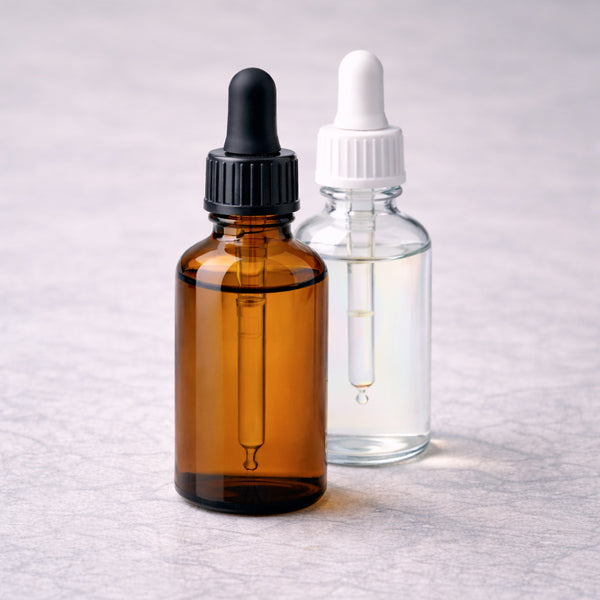
Amber glass filters light. Clear glass shows the product.
Does the Colour of the Glass Matter?
It depends on what's inside.
Many natural oils, botanical extracts and fragrances are sensitive to light. Leave them in a bright window and they can fade or change over time.
So you have a choice.
- Clear glass shows the colour of the product. It's a good choice when the product looks beautiful and won't sit in strong light.
- Amber glass filters out much of the light that causes damage. It's the classic choice for essential oils and tinctures.
- Blue, green and black glass give a range its own look, and darker glass also reduces the light getting in.
- Miron violet glass is a dark violet glass made to protect light-sensitive contents. It suits premium oils, serums and botanicals.
Our guide to amber vs clear glass goes through the trade-offs in more detail.

Featured product
Miron Dropper Bottle Orion 10ml DIN18
A small violet glass bottle for premium oils and tinctures that need protecting from light.
View productWhen Is Miron Violet Glass Worth It?
When the product is valuable and freshness is part of what you're selling.
Think high-end face oils, CBD oils, tinctures and natural perfumes. Customers pay a premium for these, and they expect the packaging to look after them.
Miron looks almost black on the shelf. That gives a small bottle a serious, apothecary feel that stands out next to rows of amber.
It isn't for everything. If you sell a bright, affordable product where colour is the selling point, clear glass will do a better job.
You can see the full range in our Miron violet glass collection.
Which Shape Suits Your Product?
Shape is where a small bottle starts to say something about your brand.
A round dropper bottle says apothecary and natural. A slim rollette says perfume oil. A square or rectangular bottle looks modern and gives you a flat face for the label.
Shape also affects the practical side.
- Labels. Small bottles have small labels. A flat face is easier to label neatly than a tight curve.
- Packing. Square bottles sit tidily side by side in a gift box.
- Handling. A taller, slimmer bottle is easier to pick up and use with one hand.
Measure a sample bottle before you design the label. The flat part of a small bottle is always shorter than it looks.

Featured product
10ml Clear Glass Rollette Bottle
A slim 10ml bottle for roll-on perfume oils, discovery sets and travel sizes.
View productHow Do Small Bottles Help With Samples and Gift Sets?
They let people try before they commit.
A full-size bottle of serum or perfume is a big ask from someone who's never used your brand. A 5ml or 10ml version is a much easier yes.
That's why small bottles turn up in so many places:
- Discovery sets of three to five scents or blends.
- Free samples slipped into orders.
- Gift sets for Christmas, birthdays and corporate gifts.
- Travel sizes that fit a wash bag.
Christmas is the big one. If you're planning a gift set, order your bottles early so you have time to fill, label and box them.
Our article on whether free samples increase sales looks at this in more depth.

30ml Clear Glass Rectangle Everest Bottle: flat faces for a perfume or body mist label.
The Bottom Line
A small glass bottle is often the first thing a new customer holds.
Make it count.
Choose the size from how the product is used. Choose the closure from how it comes out. Then pick the glass colour that protects what's inside, and a shape that suits your label and your brand.
Closures must match the bottle's neck, so use the Add Compatible Item section on each bottle's product page to see the ones that fit. You can also browse our dropper bottles and rollette bottles, read our Dropper Bottle Guide, or contact us and tell us what you're making.
FAQs
What sizes do small glass bottles come in?
Most small glass bottles are between 5ml and 30ml. 5ml and 10ml suit samples and essential oils, while 30ml is the usual size for serums and face oils.
What are small glass bottles used for?
Essential oils, serums, face oils, tinctures, perfume samples, roll-on blends, travel sizes and gift sets. The closure you choose decides how the product is used.
Should small bottles be clear or amber?
Clear glass shows the product off. Amber glass reduces the light reaching the contents, so it suits oils and extracts that are sensitive to light.
Do your small bottles come with caps?
Bottles and closures are listed separately so you can choose the one you want. Use the Add Compatible Item section on the bottle's product page to add closures that fit.
Can I buy small glass bottles in bulk?
Yes. You can order a small quantity to test, then buy in volume once you're happy. See our wholesale buying guide for more on ordering in bulk.
Leave a comment